Blocked Sinks Explained: Common Causes, Warning Signs and Solutions
A sink that drains slowly or refuses to empty can quickly disrupt a home or workplace. Blocked sinks are common in kitchens, bathrooms, rental properties and commercial premises, but the cause is not always immediately obvious. Some problems develop close to the plughole, while others occur deeper within the waste pipe or drainage system.
Recognising the early signs can help property owners take action before a minor restriction develops into an overflowing sink or recurring drainage problem. For homeowners, property managers, small business owners, estate agents, contractors and builders, knowing what causes sink blockages can also make prevention much easier.
This guide covers the most common causes, warning signs, practical solutions and professional methods used to restore proper drainage. It also explains when a problem can be handled with basic maintenance and when professional attention may be the safer option.
What Causes a Sink to Become Blocked?
A sink usually becomes blocked when waste collects inside the pipe faster than water can carry it away. Deposits can gradually narrow the available space until water struggles to pass through. The type of material responsible often depends on where the sink is located.
A kitchen sink clogged with waste is commonly affected by cooking grease, oil, food particles and other residues. Warm grease may travel down the plughole as a liquid, but it can cool and solidify inside the pipe. Food particles then stick to the greasy surface, causing the obstruction to become larger over time.
Several everyday materials can contribute to sink drainage problems:
- Fats, oils and grease: These can cool and stick to the inside of waste pipes, creating a surface that catches other debris.
- Food particles: Rice, pasta, coffee grounds and small scraps can collect in pipe bends and contribute to restrictions.
- Hair: Loose hair can combine with soap and other residue to create stubborn masses in bathroom pipework.
- Soap residue: Some soaps leave deposits that gradually accumulate inside pipes, particularly when mixed with hair and other waste.
- Foreign objects: Cotton buds, wipes, packaging and other unsuitable items can become lodged within waste pipes.
- Mineral deposits: In hard-water areas, mineral build-up may contribute to narrowing within certain pipes over a long period.
- Poor pipe installation: Incorrect gradients, damaged fittings or unsuitable pipe arrangements can make recurring drainage problems more likely.
A kitchen drain clogged repeatedly may indicate more than a small amount of waste around the plughole. Persistent problems can develop further along the pipework, particularly where grease has accumulated over a long period. Clearing only the material that can be reached from the sink may therefore provide temporary improvement without dealing with the underlying obstruction.
Prevention begins with controlling what enters the drain. Scraping plates into a food waste or general waste bin, collecting used cooking oil separately and fitting a simple sink strainer can considerably reduce the amount of material entering kitchen pipes.
Warning Signs That Your Sink Is Becoming Blocked
Complete drainage failure is often the final stage of a developing problem. In many cases, a sink gives several warning signs before water stops flowing altogether. Recognising them early can make the issue easier to investigate and reduce the chance of an inconvenient overflow.
Slow drainage is one of the clearest indicators. Water may initially take only a little longer than usual to disappear, but the delay can gradually increase as deposits continue to collect. If a sink that previously emptied quickly starts holding water, there is probably some restriction within the waste system.
Gurgling or bubbling sounds can also indicate restricted flow. These noises occur when water and air struggle to move normally through the pipework. Although an occasional noise does not necessarily mean there is a serious problem, repeated gurgling combined with slow drainage deserves attention.
Unpleasant smells are another common warning. Food, grease, soap and organic material trapped inside a pipe can begin to produce noticeable odours. Cleaning the sink itself may briefly disguise the smell without removing its source.
A bathroom sink clogged by hair, soap residue or grooming products may initially show only slow drainage. As the material builds up, water can begin collecting around the plughole, and unpleasant smells may become more noticeable. Removing visible hair can help with minor problems, but recurring symptoms can suggest that material has accumulated further inside the waste pipe.
Property managers should pay particular attention to repeated reports from the same property. A sink that needs frequent attention may have an underlying drainage defect or a deeper obstruction. Recording when and where problems occur can help identify patterns, especially in multi-occupancy buildings.
Problems affecting several fixtures at once should also be treated differently from an isolated slow sink. If multiple sinks, toilets or other drainage points begin behaving unusually at approximately the same time, the restriction could be located within shared pipework or further into the drainage system.
What to Do When a Kitchen or Bathroom Sink Is Blocked
The appropriate response depends on the severity and suspected cause of the blockage. For a minor restriction, start by stopping the use of the affected sink and removing any visible waste around the plughole. A sink strainer can be lifted and cleaned, while accessible hair or debris can be removed carefully.
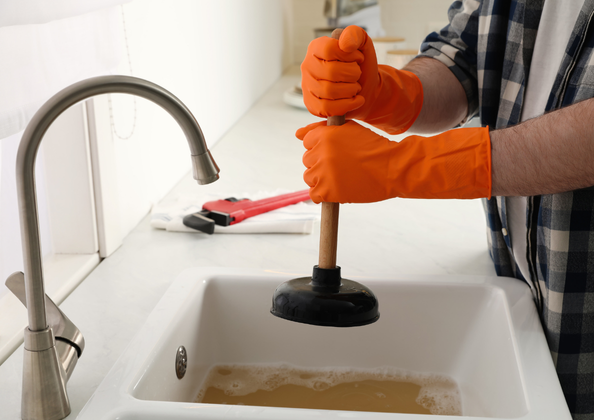
A plunger may help with some localised obstructions. There should be enough water to cover the plunger cup so that an effective seal can be created. Controlled plunging can sometimes dislodge soft material close to the waste outlet.
Care should be taken with chemical drain cleaners. Different products contain different substances, and inappropriate use can create safety concerns or affect some types of pipework. Mixing drain-cleaning chemicals is particularly unsafe. Product instructions and warnings should always be followed.
It is also important to recognise when repeated household attempts are achieving little. Continuously forcing water through a restricted pipe does not necessarily remove the material responsible. Similarly, repeatedly clearing the plughole will not solve an obstruction located further along the drainage system.
When a problem returns soon after basic clearing, a professional clog drain service may be needed to identify where the restriction is located and choose suitable equipment for the pipework. This is particularly relevant for commercial premises, rental properties and frequently used facilities where prolonged drainage disruption can affect occupants, customers or normal operations.
Signs of leakage should be taken seriously. Water appearing beneath a sink, around pipe joints or inside nearby cupboards can damage flooring, units and surrounding materials. If leakage occurs, stop using the fixture until the source has been identified.
Professional assistance is also sensible when wastewater repeatedly backs up, several drainage points are affected, strong sewage-type smells appear or the same problem keeps returning. These symptoms can point to an issue that extends beyond an ordinary sink obstruction.
How Professionals Clear Persistent Sink Blockages
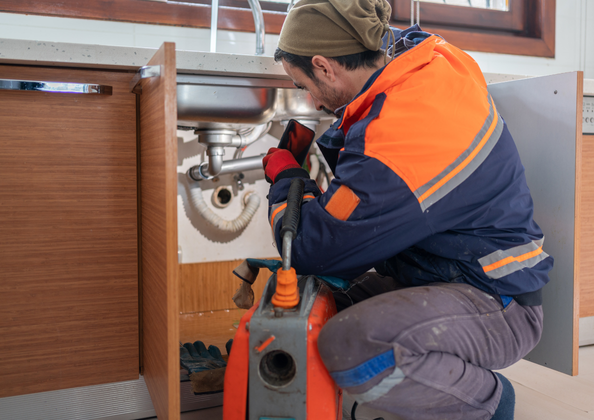
When basic maintenance does not restore normal flow, a drainage professional can assess the system and determine where the obstruction is located. The exact approach depends on the pipe layout, condition of the drainage system and type of material causing the restriction.
For blocked sinks that repeatedly cause trouble, professional assessment can help establish whether the issue is localised or part of a wider drainage problem. This distinction matters because simply removing debris near the sink will not provide a lasting result if deposits or defects exist further downstream.
Depending on the circumstances, a professional drainage visit may involve:
- Initial assessment: The engineer gathers information about the symptoms, how long they have been occurring and whether other drainage fixtures are affected.
- Accessible pipe checks: Traps and reachable sections may be examined where appropriate to identify local accumulations or foreign objects.
- Professional clearing equipment: Suitable mechanical or water-based equipment may be used to break up and remove stubborn deposits safely.
- CCTV inspection where necessary: A drainage camera can help locate recurring obstructions, damage or other problems that cannot be identified from the surface.
- Flow testing: Once clearing is complete, water flow may be checked to confirm that the affected section is draining correctly.
- Practical prevention advice: The property owner can be advised about habits or maintenance measures that may reduce the likelihood of another blockage.
Professional methods are particularly useful when the cause cannot be reached through the plughole or accessible pipework. They can also reduce unnecessary trial and error by matching the method to the actual problem.
For commercial properties, prompt investigation can be especially important. A poorly draining sink in a kitchen, washroom or staff facility can interfere with everyday operations and hygiene arrangements. Property managers and estate agents may similarly benefit from addressing recurring problems before they affect tenants or property handovers.
Contractors and builders should also consider the wider drainage arrangement when problems occur following renovation work. Construction debris, alterations to pipework or incorrect connections can sometimes contribute to drainage difficulties. Identifying the cause is more useful than repeatedly treating the visible symptom.
How to Reduce the Risk of Future Sink Blockages
Good drainage habits can prevent many everyday sink problems. The simplest principle is to minimise the amount of solid waste, grease and unsuitable material entering the pipework.
In kitchens, plates and cookware should be scraped before washing. Cooking oil should be collected and disposed of appropriately rather than poured into the sink. Even when grease is hot enough to remain liquid, it can cool after entering the pipe and attach itself to the internal surface.
Sink strainers are inexpensive but useful. They catch food scraps and other solid material before it reaches the waste pipe and can be emptied into a bin. Regularly cleaning the strainer also helps maintain water flow around the plughole.
Bathroom sinks require slightly different habits. Hair should be removed before it accumulates, and items such as wipes, cotton buds, dental floss and other personal care waste should go into a bin rather than the drainage system. Regular cleaning around the plughole can prevent residue from developing into a larger obstruction.
Routine observation is valuable as well. A sink does not need to be completely obstructed before action is taken. If water starts draining noticeably more slowly, investigating the cause early may prevent a more disruptive problem later.
Businesses and managed properties may benefit from planned maintenance where drainage systems experience heavy use. Restaurants, cafés, offices, rental accommodation and other busy premises can place considerably greater demands on drainage systems than an average household. Maintenance requirements should therefore reflect how the property is actually used.
For property professionals, keeping records of recurring drainage problems can provide useful information. If the same fixture or section of pipe repeatedly causes trouble despite responsible use, further investigation may reveal damage, poor installation, inadequate pipe gradients or another underlying issue.
Prevention cannot guarantee that a drainage problem will never occur. Pipes age, accidental obstructions happen, and faults can develop. However, sensible disposal habits combined with early attention to warning signs can substantially reduce avoidable problems and help drainage systems operate effectively.
Blocked Drain Cleaning Bromley provides practical drainage support for homeowners, landlords, property managers, businesses and other property professionals in Bromley. Local knowledge can be particularly useful when dealing with drainage problems because property types, pipework and access arrangements can vary considerably.
The focus is on identifying the cause of the problem rather than simply dealing with the most obvious symptom. A careful assessment allows the appropriate clearing method to be selected while helping property owners understand what may have caused the issue and how they can reduce the chance of it returning.
Customers also benefit from a professional and reassuring approach. Blocked sinks and other drainage problems can be inconvenient and stressful, particularly when they interfere with kitchens, bathrooms or commercial facilities. Clear communication and appropriate solutions help make the process easier to manage.
Check out our latest X update explaining the common causes, warning signs and practical solutions for
blocked sinks!
You might also like